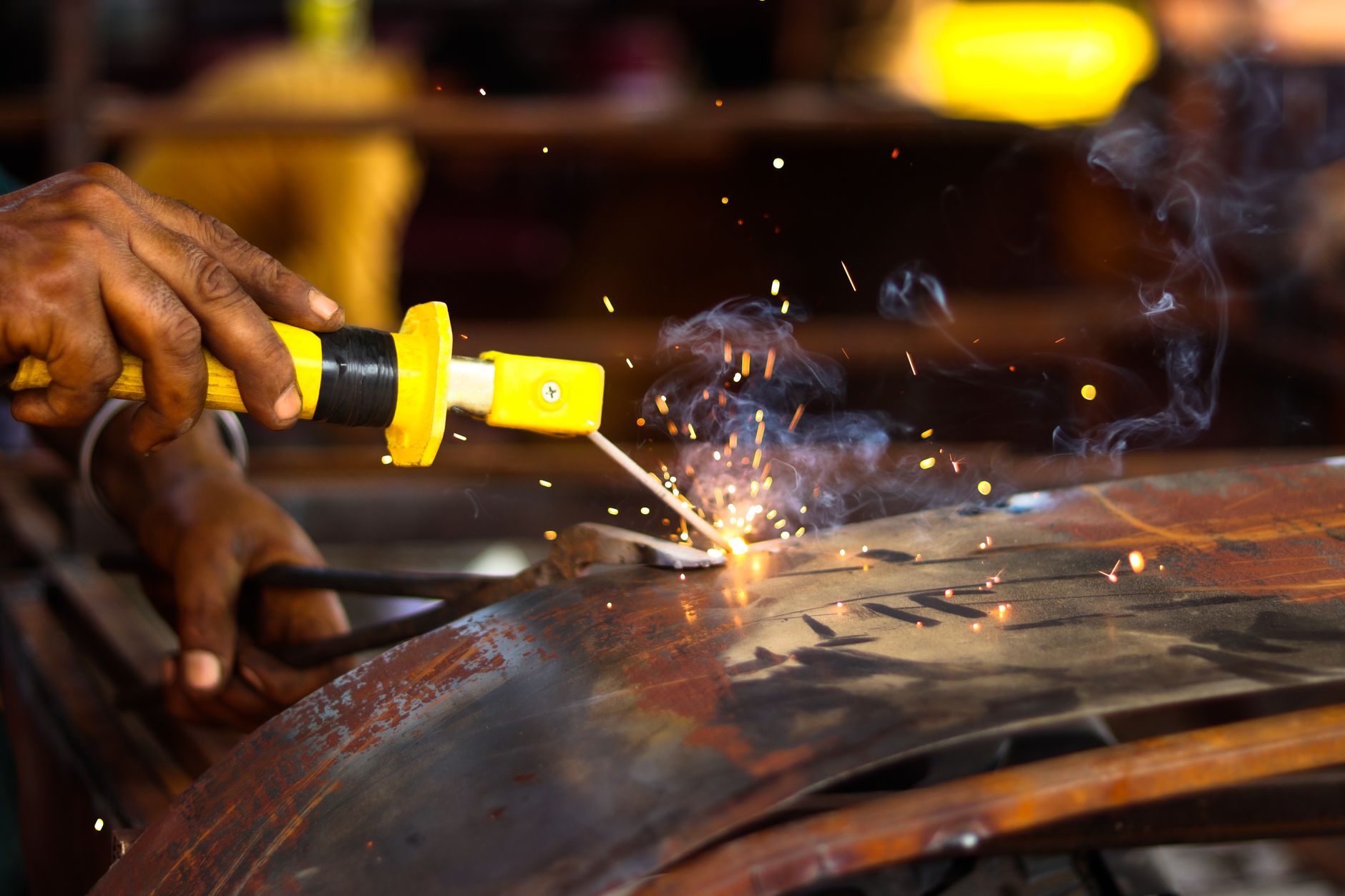
Welding thick metal sections, common in structural steel, pressure vessel, and heavy machinery fabrication, presents unique challenges. The rapid cooling rates and inherent stresses can lead to serious defects if not managed properly. This is where pre-heat and post-weld heat treatment (PWHT) become indispensable steps, not optional extras. Ignoring them risks costly repairs, project delays, and ultimately, structural failure. Proper thermal management is the cornerstone of robust thick-section welds.
Why Pre-Heating Is Non-Negotiable
Pre-heating involves raising the base metal temperature in the weld zone before welding begins. Its primary purpose is to slow down the cooling rate of the weld metal and the heat-affected zone (HAZ). Slower cooling provides more time for diffusible hydrogen to escape, significantly reducing the risk of hydrogen-induced cold cracking – a common and insidious defect in thick sections.
Beyond hydrogen control, pre-heating also minimizes the temperature difference between the weld metal and the base metal. This reduces thermal shock and lowers the shrinkage stresses that develop as the weld cools, improving ductility and preventing solidification cracking. It also helps in achieving better fusion, especially with low alloy steels or when welding in cold environments, ensuring a stronger, more consistent joint.
- Material type and chemical composition (especially carbon equivalent)
- Material thickness
- Restraint of the joint
- Filler metal composition
- Environmental temperature
The Role of Post-Weld Heat Treatment (PWHT)
Once welding is complete, PWHT is often required to further refine the weld and HAZ properties. The most common type of PWHT is stress relief annealing. This process involves heating the welded component to a specific temperature (below the transformation temperature), holding it for a determined period, and then slowly cooling it. The aim is to reduce residual stresses locked into the material from the welding process.
Residual stresses can lead to distortion, premature fatigue failure, and stress corrosion cracking. PWHT also helps to temper hardened microstructures in the HAZ, improving toughness and ductility. For certain alloys, it can even modify the grain structure, enhancing overall mechanical properties. Adhering to precise temperature and soak times, as per project specifications or standards like IS 814:2004 where applicable for electrode selection, is crucial for effective PWHT.
Practical Application and Compliance in India
Implementing pre-heat and PWHT requires careful planning and execution. Pre-heating can be achieved using various methods: localized torches, induction heaters, radiant heaters, or even furnace heating for smaller components. Maintaining the interpass temperature – the temperature of the weld before depositing the next pass – is equally critical to prevent rapid cooling between layers. For PWHT, furnace heating with precise temperature control is standard.
In India, contractors and fabricators in Kota and across the nation must strictly adhere to project specifications, which often reference international codes (ASME, AWS) and national standards. Understanding the material's properties and selecting appropriate welding electrodes, such as those from Prakash Electrodes like SUNLIGHT-13 or WELDARC, that are designed for thick section welding and compliant with IS 814:2004, is fundamental. Proper documentation of heating cycles is also vital for quality assurance.
“A weld isn't just about fusion; it's about making sure it stays together long after it cools. That's where smart heat management comes in.”
Pre-heating and post-weld heat treatment are not mere recommendations but essential engineering controls for reliable thick section welding. They directly combat critical defects like hydrogen cracking and residual stresses, ensuring the longevity and safety of fabricated structures. For your heavy-duty welding projects, always prioritize these thermal treatments and choose high-quality, dependable electrodes like those from our WELDARC range, trusted by skilled welders nationwide for their consistent performance.