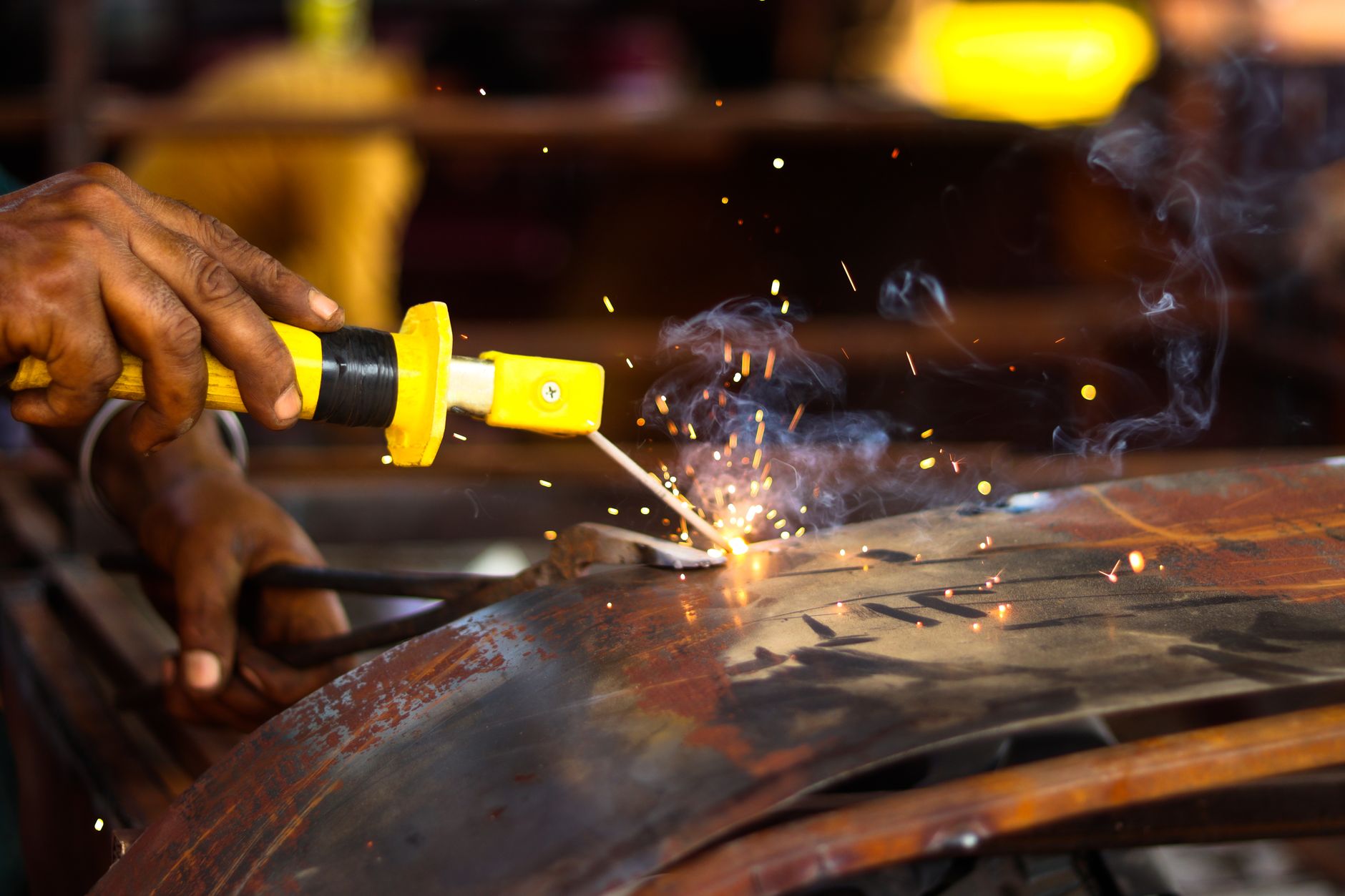
In India's ambitious infrastructure push and burgeoning manufacturing sector, bridges and heavy machinery form the backbone of progress. From the flyovers connecting our bustling cities to the massive excavators shaping our landscapes and the industrial presses driving production, these structures bear immense loads and face relentless stresses daily. The unseen heroes ensuring their enduring integrity are the welds – and by extension, the quality of the welding electrodes used. Compromise here isn't an option; it risks catastrophic failure, human lives, and massive economic losses, impacting national development directly.
Why Quality Matters in Critical Applications
For applications like bridge girders, crane booms, pressure vessels, and earthmoving equipment, welds are not merely joining points; they are integral, critical structural components. Inferior electrodes often lead to a myriad of defects such as porosity, inadequate penetration, hydrogen embrittlement leading to cracking, and lack of fusion. These imperfections act as severe stress concentrators, drastically reducing both the fatigue life and the static strength of the welded joint. This directly translates to potential breakdowns, costly unscheduled repairs, and, in the most severe cases, catastrophic structural collapse, jeopardizing both safety and investment.
The choice of electrode directly influences the mechanical properties of the weld metal, including its tensile strength, yield strength, impact toughness, and ductility. These properties are paramount for structures that must withstand dynamic loads, vibrations, and extreme temperatures without fail.
- Consistent Mechanical Properties: Achieving high tensile strength, yield strength, and crucial impact toughness, consistently meeting or exceeding stringent specifications like those outlined in IS 814:2004 for specific applications.
- Low Hydrogen Content: Absolutely essential for preventing hydrogen-induced cracking (HIC) in thick sections and high-strength steels, which are common in heavy fabrication.
- Excellent Weldability: Providing a stable, smooth arc, minimal spatter, and good slag detachability, ensuring consistent bead profile and significantly reducing rework and post-weld cleaning.
- Radiographic Soundness: Producing welds that are consistently free from internal defects such as porosity, inclusions, and lack of fusion, making them sound under non-destructive testing like X-ray.
- Moisture Resistance: Advanced electrode coatings designed to resist moisture absorption, particularly critical for basic (low hydrogen) electrodes, to maintain their integrity and performance.
Specific Challenges in Bridge Fabrication
Bridges are subjected to constant, complex dynamic loads from heavy traffic, extreme fluctuations in temperature, and continuous environmental corrosion. Welds in bridge structures must therefore withstand millions of stress cycles over decades without succumbing to fatigue failure. Using electrodes with superior toughness, ductility, and fatigue resistance is absolutely non-negotiable. Indian standards, particularly IS 814:2004 for covered electrodes, provide detailed guidelines for selecting appropriate electrodes based on steel type, plate thickness, and expected service conditions. Fabricators in Kota and across India understand that robust, defect-free welds are the primary defense against structural fatigue and brittle fracture, ensuring longevity in our diverse climatic conditions.
Heavy Machinery: Demands and Durability
Heavy machinery, ranging from excavators and bulldozers to massive industrial presses and sophisticated mining equipment, operates under incredibly extreme conditions. They endure constant impact, severe abrasion, high-frequency vibration, and significant stress concentrations. Welds in these applications must not only provide exceptional structural strength but also possess excellent wear resistance and sufficient ductility to absorb shocks and vibrations without cracking or deforming. Whether it's manufacturing new, high-performance equipment or undertaking critical repair and maintenance in the field, the meticulous choice of the right electrode ensures maximum machinery uptime, operational safety, and directly impacts productivity and profitability for businesses across India.
“A weak weld in a critical structure isn't just a failure; it's a disaster waiting to happen. Choose your electrodes wisely.”
In the demanding world of bridge and heavy machinery fabrication, there's no room for shortcuts. The judicious choice of welding electrodes directly impacts structural integrity, operational longevity, and most importantly, human safety. By insisting on high-quality, reliable electrodes that meet national and international standards, fabricators are not just making a purchase; they are making a profound investment in the safety, durability, and future of India's critical infrastructure and industrial backbone. At Prakash Electrodes, our WELDARC range is specifically engineered and rigorously tested to meet these stringent demands, providing the unwavering consistency and superior performance critical for your most challenging and vital projects.