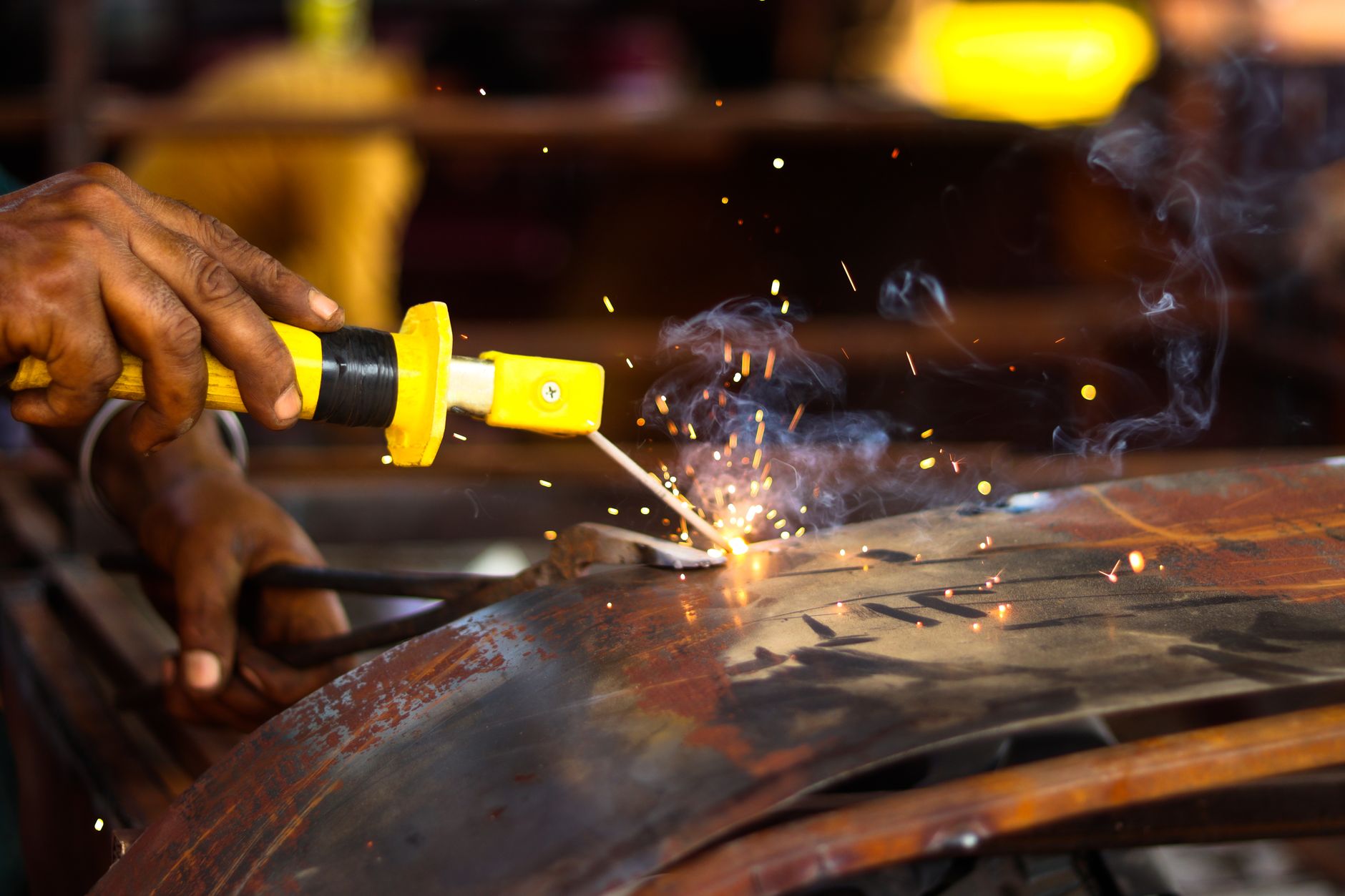
Every welder, from seasoned fabricators in Kota to new apprentices, encounters welding defects. These imperfections not only compromise weld integrity but also lead to costly rework and project delays. Understanding common defects and knowing how to correct them on the spot is crucial for maintaining quality and efficiency. This guide will walk you through identifying typical issues and providing immediate, practical solutions.
Porosity and Blowholes
Porosity appears as small, gas-filled pockets within the weld metal, while blowholes are larger, more distinct cavities. They indicate trapped gas that failed to escape before the weld solidified, significantly weakening the joint. This is a common issue that often requires immediate attention, especially in critical applications.
Causes often include moisture in the electrode coating (a common issue if electrodes are not stored correctly), rust or contaminants on the base metal, excessive arc length, or an inadequate gas shield. To correct on the spot, ensure your work area and base metal are clean and dry. Use fresh, properly stored electrodes, like Prakash Electrodes' SUNLIGHT-13, which are known for their consistent performance even in challenging conditions. Reduce arc length and adjust shielding gas flow for MIG/MAG welding.
Undercut
Undercut is a groove melted into the base metal adjacent to the weld toe, left unfilled by weld metal. It reduces the thickness of the base metal, creating a stress concentration point and significantly lowering the fatigue strength of the joint. This defect is often visible and needs immediate rectification.
The primary causes are excessively high welding current, a long arc, fast travel speed, or an incorrect electrode angle. To fix it quickly, reduce your welding current. Maintain a shorter arc length and slow down your travel speed. Adjust your electrode angle to ensure the arc force pushes the molten puddle into the joint, not away from the base metal. Make sure to use electrodes appropriate for the welding position and material thickness, as per IS 814:2004 guidelines.
Slag Inclusions
Slag inclusions are non-metallic solid materials, usually oxides, trapped within the weld metal or between weld passes. They are a common defect, especially in multi-pass welding with covered electrodes, and act as stress risers, reducing the weld's strength and ductility.
This usually happens due to inadequate cleaning of previous weld passes or the base metal, incorrect electrode manipulation, or insufficient current. To correct this, thoroughly clean the previous weld bead and groove before depositing the next pass. Use a chipping hammer and wire brush diligently. Ensure proper electrode angle and travel speed to allow the molten slag to float to the surface. For consistent results, rely on quality electrodes like HITKARI GOLD, which provide good slag detachability.
Lack of Fusion and Lack of Penetration
Lack of fusion occurs when the weld metal fails to fuse completely with the base metal or with a previous weld pass. Lack of penetration is when the weld metal does not extend through the full thickness of the joint. Both defects create internal discontinuities that severely weaken the joint, making them prone to failure.
Common causes include insufficient welding current, too fast travel speed, improper joint preparation, or a large electrode diameter for the joint. To fix this, increase your welding current to ensure sufficient heat input. Slow down your travel speed to allow the molten metal to fully penetrate and fuse. Prepare your joint correctly with appropriate root gap and bevel angles. For reliable penetration, especially in critical structural welds, Prakash Electrodes' WELDARC series is a trusted choice across India.
- Always start with clean, dry base metal.
- Ensure electrodes are stored properly to prevent moisture absorption.
- Use appropriate welding parameters (current, voltage, travel speed) for the material and electrode type.
- Maintain a consistent arc length and electrode angle.
- Perform thorough interpass cleaning in multi-pass welds.
- Regularly inspect your equipment for proper function.
“A good weld isn't just strong; it's clean and consistent. Inspect before you accept.”
Understanding and immediately correcting welding defects is paramount for any skilled welder in India. By applying these on-the-spot solutions, you ensure high-quality, reliable welds that meet industry standards like IS 814:2004. Always choose high-quality electrodes from Prakash Electrodes Private Limited – your partner in achieving defect-free welds from Kota since 1985.